
Overview:
Like Toy Soldiers was directed by Benjamin and Alexander Brewer (The Brewer Brothers) and was produced by Eminem. The song is one of Eminem’s most emotionally reflective tracks, discussing the destructive nature of rap beefs, including his own conflicts with artists like Ja Rule and Benzino. The song samples Martika “Toy Soldiers”. Eminem uses the metaphor of soldiers in a war to describe the way rappers are pulled into violent escalating feuds that often results in tragedy. Like Toy Soldiers reflects on loss, accountability, and Eminem’s desire to step away from the cycle of retaliation.
Visual Style & Themes:
The music id powerful and deliberately stripped of glamor. It follows Eminem through a narrative where he learns of a friend’s death, represented by a fictional version of rapper Proof, who plays the friend in the video. The story unfolds like a tragic movie, showing hospital scenes, mourning, funeral footage that feel eerily prophetic, especially following the real-life murder of Big Proof in 2006.
Eminem’s Look:
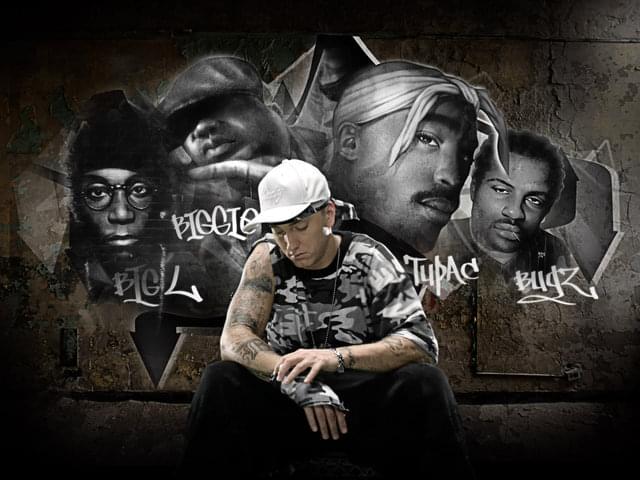
Eminem’s look is intentionally minimal, wearing a camouflage oversized t-shirt symbolizing the soldier metaphor. His overall look focuses more on his expressions and the video’s storyline rather than fashion.
Iconic Moments:
Eminem at the hospital, witnessing his friend’s death is his most emotional scenes yet that is repeatedly talked about among fans and critics. The funeral scene with a casket bearing “Proof”‘s character is now seen as a haunting premonition of Proof’s real death just a year later. The haunting voice of Martika singing “Step by step, heart to heart” drives home the emotional and anti-violence message. Eminem rapping in front of a memorial wall of Big L, Biggie, Tupac, and his late friend Bugz.
Cultural Impact:
Like Toy Soldiers was praised for its maturity and vulnerability. It marked a shift in Eminem’s approach to conflict and violence in the music industry. Many fans and critics applauded the song for encouraging peace and reflection during a time when hip-hop beefs were often escalating into real-life violence. Sadly, the death of Proof in 2006 gave the video and song an even deeper and more heartbreaking resonance.
Tap “Next” to explore “When I’m Gone (2005)”
 Eminem Fashion