
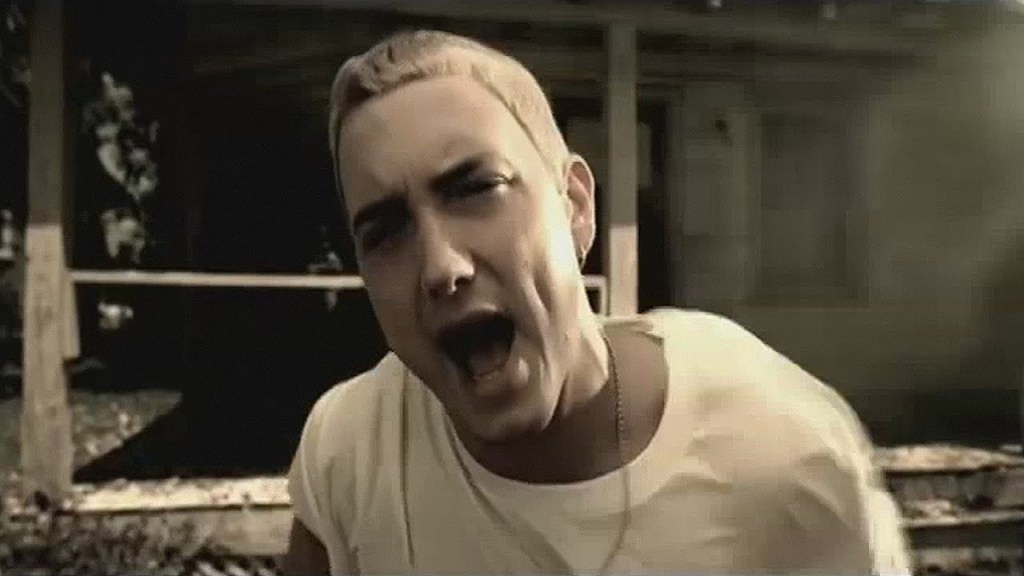
Overview:
The Way I Am is Eminem’s defiant response to fame, media pressure, fans, and censorship. The track was directed by Paul Hunter and was produced by Eminem himself. The music was dark, moody, and intense. It visually mirrors the song’s heavy emotions emphasizing Eminem’s frustration with public expectations and the overwhelming weight of stardom. The video’s imagery is symbolic and emotional, making it one of Eminem’s most artistically powerful visuals.
Visual Style & Themes:
The video is drenched in shadows and moody lighting, emphasizing a sense of emotional struggle. Shots of Eminem falling from a building symbolizes the suffocating pressure of fame. The lyrics and visuals convey a refusal to conform or be controlled, both by the industry and the media. The scene where Eminem is trying to feed his daughter clearly represents fame has no privacy.
Eminem’s Look:
In The Way I Am, Eminem strips back the flashy Slim Shady persona and embraces who he truly is, Marshall Mathers. His style throughout the whole video is low-key and intentionally unpolished, showing his emotional detachment, frustration, and refusal to be a mainstream puppet. The minimalism in his wardrobe places all the focus on his message rather than his image.
Iconic Moments:
Eminem falling from the building is one of his most memorable scene in the video because it symbolized losing control under fame. The heart-breaking scene where his ex wife Kim Mathers, his high school sweetheart, packed her things and Hailie’s things, and left with Hailie, leaving Eminem alone. This symbolized that while being famous offered him a voice and financial stability to take care of his family, keeping his family together was a struggle since he was always under limelight with very little privacy, as also shown in the restroom scene where he took with a fan (who is actually his real life brother, Nathan Kane Mathers).
The final shot of him as he crashes on to the ground is unresolved and raw.
Cultural Impact:
This marked Eminem’s evolution into a more serious, introspective artist. This song was praised worldwide for its honesty, authenticity, and refusal to sugar-cote the dark side of fame. The lyrics and music video helped shift the publics perception on the controversial rapper, from a rapper who was always in the media for beefs with other rappers, pop singers, and boy groups to a rapper who showed his most vulnerable side to the world. The video’s tone and message influenced countless other artists dealing with fame and mental health to speak out on the dark side of fame.
Tap “Next” to explore “Without Me (2002)”
 Eminem Fashion